Paint ceiling or walls first is easier to answer when you look at the room as a set of decisions rather than one fixed recipe. If both the ceiling and walls are being repainted, starting overhead is often practical because the walls are still available to cover minor drips, spatter, or overlap.
For a Mint Hill interior, the sequence should also account for repairs, trim, masking, product dry times, and any surfaces that are staying untouched. A good plan tells you not only where to start, but what has to be ready before the next stage begins.
Use This Decision Tree Before You Open the Paint
Start with the scope. The painting order changes when the ceiling, walls, trim, or only one part of the room is included.
This approach keeps the project tied to the actual room instead of forcing every repaint into the same sequence.

If Both Surfaces Are Changing, Start Overhead
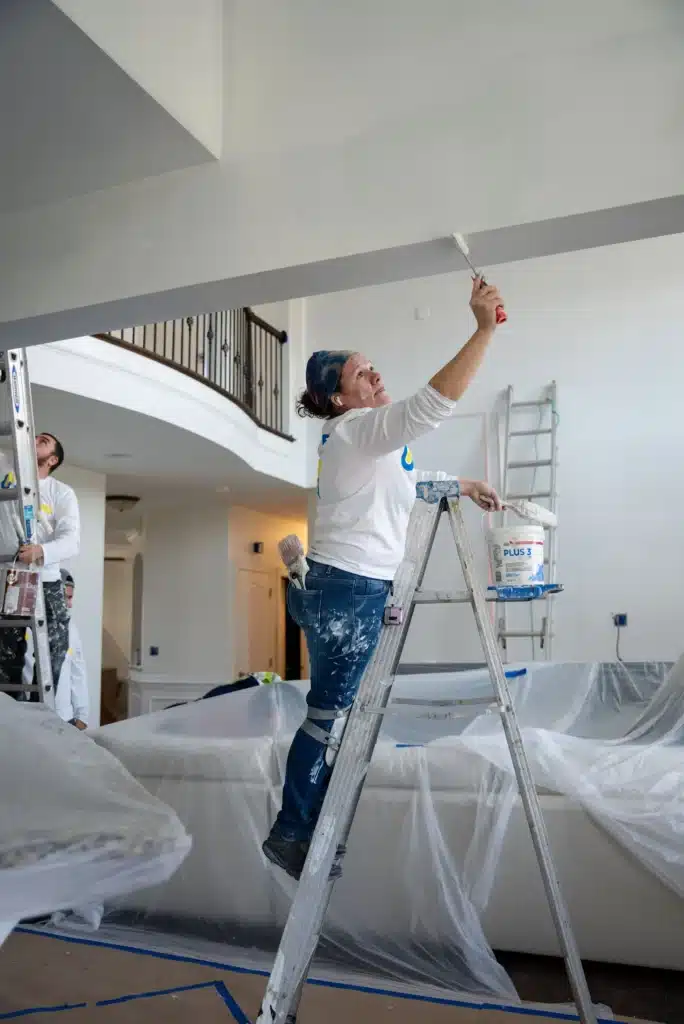
Ceiling work takes place above the walls, furniture, floors, and trim. Small drips, roller spatter, or overlap at the ceiling line can reach the surfaces below.
When the walls have not been finished yet, those marks can be addressed during the wall stage. That is the practical reason ceiling first is common on full-room repaints.
It also allows ceiling patching, sanding, and primer to happen before the wall color becomes another finished surface that needs protection.
Check the Ceiling Condition Before Deciding the Next Step
A ceiling may need more than color. Water stains, drywall repairs, cracks, old texture, or popcorn removal can add preparation steps before the finish coating begins.
Ukie Painting currently lists ceiling painting, drywall repair, sanding and carpentry prep, and popcorn ceiling removal or knockdown among its interior services. Those needs can change the room schedule because repairs and primer must be ready before finish coats continue.
That makes ceiling condition a better planning tool than a simple top-to-bottom rule.
Primer Belongs Where the Surface Calls for It
Primer is not automatically required across every ceiling and wall. Bare repairs, stains, porous material, glossy coatings, and large color changes can affect the primer decision.
Match the primer to the substrate and finish coating, then follow the product instructions for drying and recoating.
Ukie Painting’s guide to paint primer and surface preparation explains why primer should be selected for the condition of the surface rather than added by habit.
The Wall Stage Finishes the Ceiling-to-Wall Line
After the ceiling reaches the stage required by the coating instructions, the walls can become the focus. The wall color establishes the final line where the two surfaces meet.
This is also when small amounts of ceiling coating that reached the upper wall can be covered. The result depends on careful edge work, consistent wall application, and giving the ceiling enough time before masking or nearby work begins.
For more on interior application and preparation, Ukie Painting’s interior painting tips cover several decisions that affect the finished room.
Decide the Trim Strategy Before the Wall Finish Is Complete
Trim does not have one mandatory place in every professional workflow. Some painters complete the walls first and finish the trim afterward. Others paint trim earlier and protect it once the coating has dried enough for the next stage.
The better method depends on the trim coating, the amount of molding or millwork, the masking plan, and how the painter intends to create the final edge.
In rooms with crown molding, doors, baseboards, or built-ins, deciding the trim strategy early can prevent the sequence from changing halfway through the project.
Do Not Use Paint Type as a Shortcut for the Sequence
Ceiling paint and wall paint can have different sheens, approved uses, and cleaning properties, but those differences do not create one universal painting order.
Many ceiling coatings use flat or low-sheen finishes, while wall coatings may be available in several sheen levels. Product formulas vary, so check the approved surfaces and instructions for the exact coating.
Ukie Painting’s guide to using ceiling paint on walls explains why product selection should be based on the coating itself rather than broad assumptions about ceiling and wall paint.
Know What “Ready for the Next Stage” Means
A surface can look dry before it is ready for recoating, masking, cleaning, or normal use. Those are different stages.
Temperature, humidity, airflow, repair materials, and application thickness can affect timing, so use the exact product label or technical data sheet.
A Better Way to Evaluate a Painting Company
Instead of testing a contractor with one “correct” sequence, ask them to explain the plan for your specific room. A useful answer should connect the order to the surfaces, preparation, products, protection, and drying schedule.
A clear explanation shows that the room has been planned as a project rather than treated as a generic repaint.
Indoor Painting Safety During the Project
Follow the safety directions on each primer, paint, cleaner, filler, or repair product used indoors. Ventilate the work area as directed and use any protective equipment listed by the manufacturer.
The EPA recommends providing plenty of fresh air during painting and remodeling when products may release volatile organic compounds.
Interior Painting With Ukie Painting
Ukie Painting is a locally owned and operated painting company based in Mint Hill and serving the Greater Charlotte area. The company was founded in 2021 by Vitalii Skochenko and Andrii Spivak.
Current company information lists interior painting for walls, ceilings, trim, doors, accent walls, drywall repair, wallpaper work, sanding and carpentry prep, and popcorn ceiling removal. Ukie Painting also offers free estimates, virtual or phone estimates, free designer color consultations, daily communication, complete cleanup, and licensed and insured service.
The company currently publishes a labor and material guarantee for interior and exterior projects. Its specific up-to-20-year warranty is published for qualifying exterior work, not as a blanket interior warranty term.
Frequently Asked Questions About Planning the Painting Order
Should I paint the ceiling or walls first in a full room repaint?
If both surfaces are changing, ceiling first is often the practical choice because overhead work is completed before the walls become finished surfaces.
What if the ceiling is already in good condition?
If it is not part of the project, protect it and begin with the surfaces that actually need work. There is no reason to repaint a ceiling simply to follow a standard sequence.
Should trim be painted before or after the walls?
Either approach can work. The better choice depends on the trim coating, masking method, amount of millwork, and how the final edges will be created.
How long should the ceiling dry before I start the walls?
Use the dry, recoat, and masking guidance for the exact ceiling coating. Room conditions and the amount of repair work can change the schedule.
Does ceiling paint have to be different from wall paint?
Use each product according to its approved surfaces and performance instructions. Some coatings may be approved for more than one surface, while others are designed for a narrower use.