
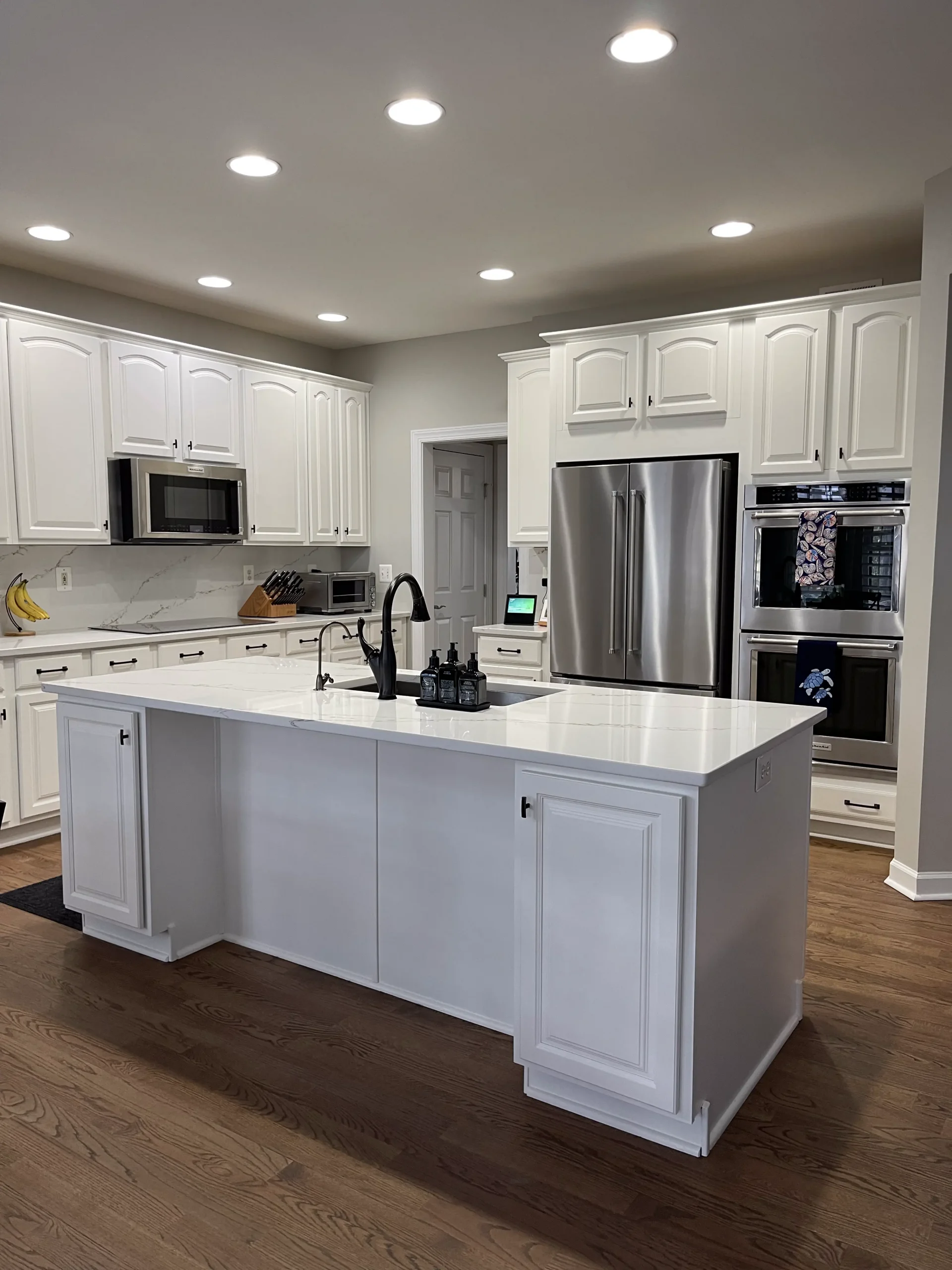
Choosing among the best white paint colors for kitchen cabinets can feel harder than expected. A swatch that looks soft and clean in the store may look yellow, gray, or too bright once it sits beside your countertops, flooring, hardware, and kitchen lighting.
This guide compares seven popular whites from warm to crisp, explains how light reflectance and undertones affect the result, and shows you how to test each option before you commit.
Key Takeaways:
Why White Cabinet Colors Look Different at Home
White paint contains subtle pigments that can lean warm, cool, gray, green, or neutral. Those pigments become easier to see when the cabinet color is placed beside stone counters, backsplash tile, wood flooring, appliances, and trim.
LRV adds another useful piece of information. The scale runs from 0 for black to 100 for a theoretical pure white. A higher number means the color reflects more visible light, but two whites with similar LRVs can still look very different because their undertones are not the same.
Kitchen exposure also changes the result. North-facing light often reads cooler, while south-facing light is usually warmer. East-facing rooms receive stronger morning light, and west-facing rooms tend to warm up later in the day. Artificial lighting can shift the color again after sunset.
Before choosing a cabinet color, compare the repainting investment with the rest of your plans. Our guide to the cost to paint kitchen cabinets explains what usually affects the final price.
7 White Paint Colors for Kitchen Cabinets, From Warmest to Crispest
1. Sherwin-Williams Alabaster SW 7008
Alabaster is a soft, balanced white with an LRV near 82. It carries noticeable warmth without reading like a deep cream in most spaces. It can pair well with warm wood floors, beige or cream counters, and brass or bronze hardware.
In a kitchen with strong warm light, Alabaster may look creamier than expected. Compare it with your trim so the two whites do not clash.
Best fit: Warm flooring, traditional kitchens, farmhouse details, and spaces that need a softer white.
2. Benjamin Moore White Dove OC-17
White Dove has an LRV just above 83 and a soft, warm appearance. It is less creamy than many off-whites, which helps it work with a broad mix of counters and hardware finishes.
It is a practical starting point for kitchens that combine warm and cool materials. Still, nearby finishes can pull out its warmth, so test it beside the backsplash and trim.
Best fit: Mixed metals, wood flooring, varied countertop colors, and homeowners who want a gentle white.
3. Benjamin Moore Simply White OC-117
Simply White has an LRV near 90 and a small amount of warmth. The high reflectance makes it feel brighter than White Dove or Alabaster, while the warm note keeps it from looking as sharp as some cooler whites.
It can work well in smaller kitchens or rooms that need a lighter appearance. Pair it carefully with existing bright-white trim because the difference in undertone may become visible.
Best fit: Smaller kitchens, light quartz, warm-neutral materials, and spaces that need a brighter warm white.
4. Sherwin-Williams Pure White SW 7005
Pure White has an LRV near 84. Despite the name, it is not a stark white. Its small amount of warmth helps it sit between creamy whites and sharper options.
This middle position makes Pure White useful in kitchens with a mix of warm and cool finishes. It is also easier to coordinate with trim than a strongly creamy or cool white.
Best fit: Transitional kitchens, mixed finishes, moderate natural light, and homeowners who want a clean but forgiving white.
5. Benjamin Moore Chantilly Lace OC-65
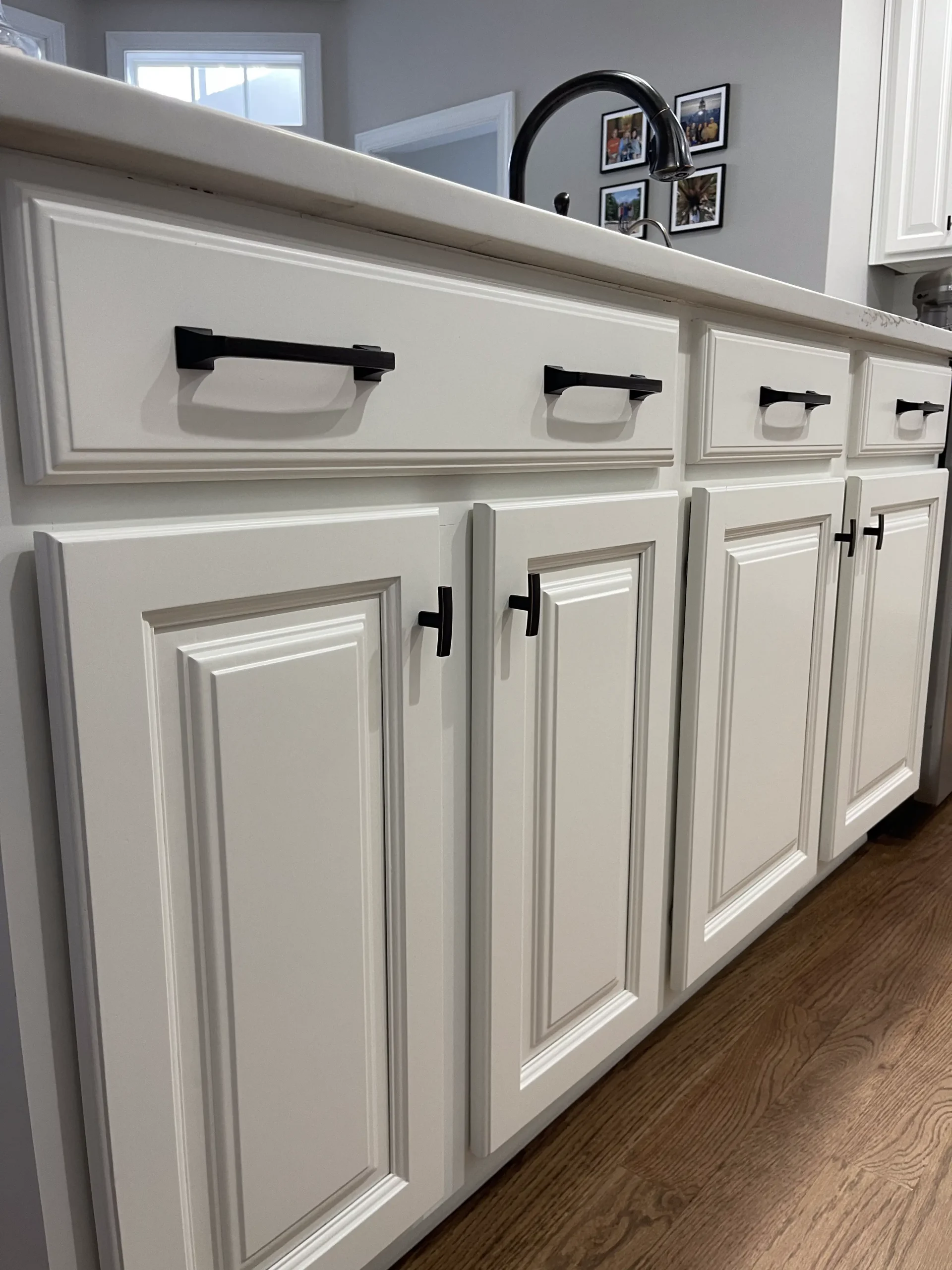
Chantilly Lace has an LRV just above 90 and is one of the brighter options on this list. It has very little visible warmth compared with White Dove, Alabaster, and Simply White.
That crisp look can suit modern kitchens, white quartz, stainless appliances, and black hardware. In a room filled with warm beige finishes, it may make those nearby materials look more yellow.
Best fit: Modern kitchens, bright counters, black or stainless accents, and spaces with balanced natural light.
6. Sherwin-Williams Extra White SW 7006
Extra White has an LRV near 86 and can read slightly cooler than Pure White. It creates clean separation against gray tile, cool stone, and darker cabinet hardware.
Because cooler whites can look sharper in north-facing rooms, compare Extra White with a warmer option before making the final decision.
Best fit: Cool countertops, gray tile, contemporary kitchens, and homeowners who want defined contrast.
7. Sherwin-Williams High Reflective White SW 7757
High Reflective White has an LRV near 93, making it the brightest Sherwin-Williams option in this group. It reflects a large amount of available light and has less visible color than softer whites.
Its brightness does not create light that is not already present. In dim spaces, it can still look muted or pick up colors from nearby surfaces. Test it beside warm counters and trim because the contrast may be stronger than expected.
Best fit: Crisp modern kitchens, strong contrast, bright trim, and homeowners who want a very clean white.
How Lighting and Existing Finishes Change White Paint
A white cabinet color should be judged as part of the full kitchen, not as a stand-alone swatch. Countertops, floors, backsplashes, wall colors, and appliances all reflect color onto the cabinets.
A warm granite counter may bring out cream or yellow notes. Cool quartz and gray tile can make a warm white look softer or make a cool white look sharper. Wood floors can add warmth, while stainless appliances and black hardware often create stronger contrast.
This is also why a lighter color can help a tight room feel more open without solving every design problem. Our guide to cabinet painting ideas for small kitchens covers other ways to use color and layout together.
How to Sample White Cabinet Paint the Right Way
Do not make the final choice from a small chip under store lighting. Narrow the list to two or three colors, then apply each option to a large sample board, a spare cabinet door, or another smooth surface prepared in a similar way.
Move the samples beside the upper cabinets, lower cabinets, island, countertops, backsplash, flooring, and trim. Check them in the morning, afternoon, evening, and under the lights you use at night.
The PCA approved-sample procedure for paint and coating systems explains how an approved sample can establish an expected finish before the full project begins. For a homeowner, the practical lesson is simple: agree on the color, sheen, and sample appearance before all the doors and frames are coated.
Does Cabinet Paint Finish Matter as Much as Color?
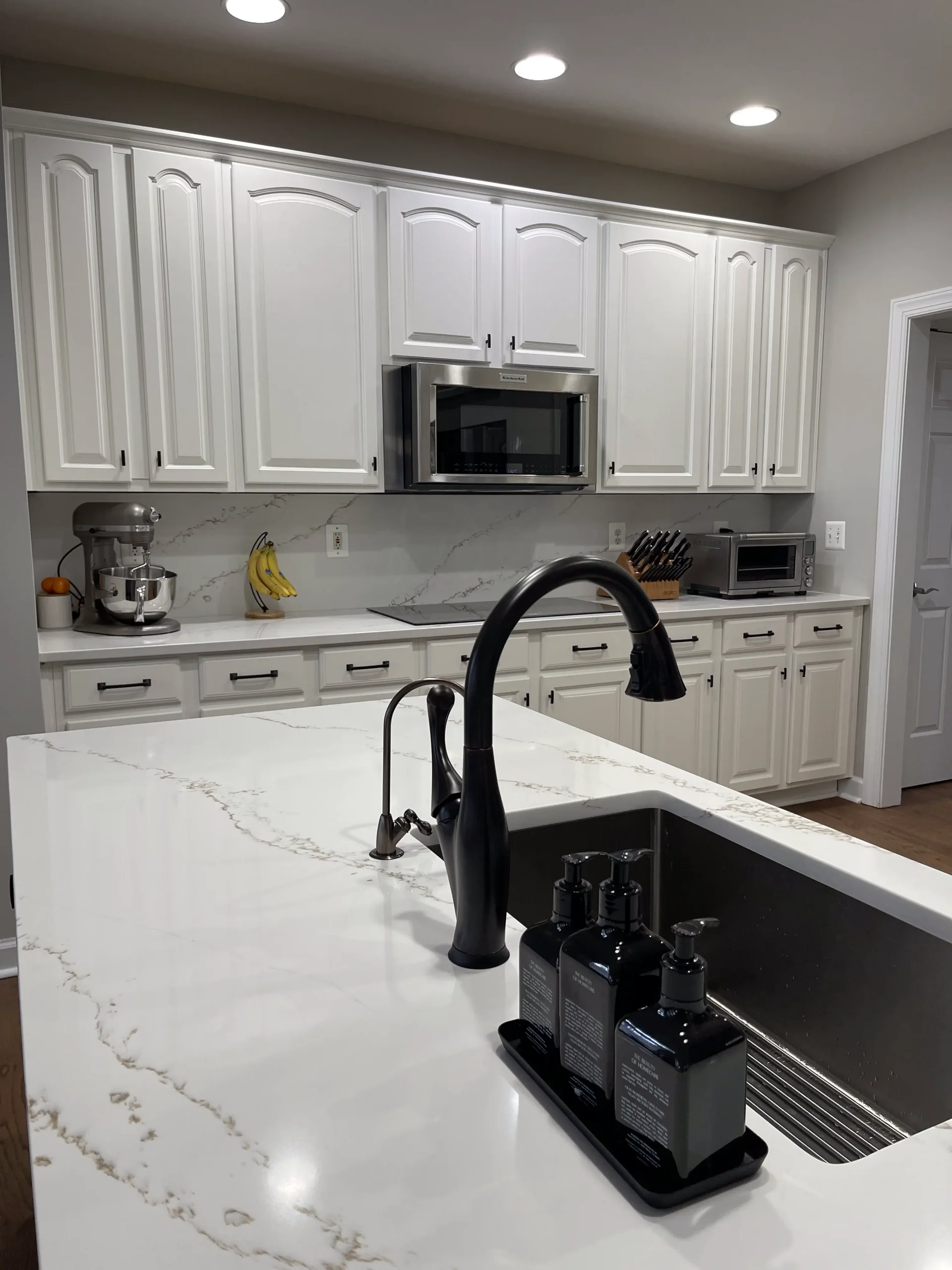
Finish affects appearance, cleaning, and how clearly surface flaws show. Flat and standard eggshell wall paints are usually poor choices for working kitchen cabinets because cabinet doors and drawer fronts are touched and cleaned often.
Satin and semi-gloss can both work when they are part of a cabinet-grade coating system. Satin gives a softer look and can hide small surface flaws better. Semi-gloss reflects more light and is often easier to wipe clean, but it can make dents, grain, or uneven prep easier to see.
The coating type, surface preparation, primer, application method, and curing time matter more than choosing a sheen by itself. Review these common cabinet painting mistakes before deciding that color and sheen are the only choices that affect the result.
How Ukie Painting Handles Color Selection and Refinishing
Ukie Painting includes a designer color consultation with residential projects. The process considers the kitchen’s natural light, artificial lighting, counters, flooring, backsplash, trim, and hardware before the final color is approved.
For cabinet refinishing, doors and drawer fronts are removed and taken to the shop for cleaning, sanding, priming, and spraying. Frames and fixed cabinet surfaces are prepared and coated in the home. This process is designed to provide consistent coverage across doors, drawers, and fixed surfaces.
Color cannot make up for weak preparation. This guide to how surface preparation affects paint durability explains why cleaning, sanding, and priming affect adhesion and wear.
Ukie Painting backs cabinet projects with a five-year warranty, with terms based on the condition and existing finish of the surface.
A Quick Way to Narrow the List
Use your kitchen’s existing materials to reduce the seven choices to two or three finalists:
Do not rely on the category alone. The final choice should come from a large sample viewed in your kitchen throughout the day.
Frequently Asked Questions About White Cabinet Paint Colors
What is the safest white cabinet color for mixed finishes?
White Dove and Pure White are useful starting points because both sit between very creamy and very crisp whites. A sample is still needed because counters, floors, and lighting can shift their appearance.
Should kitchen cabinets match the trim exactly?
They do not have to match, but two different whites placed close together can make one look yellow, gray, or dull. Matching the color or choosing whites with similar undertones usually creates a more connected look.
Is a higher LRV always better for cabinets?
No. A higher LRV means more visible light is reflected. It does not mean the color will suit your countertops, lighting, or trim. Undertone and surrounding materials still guide the decision.
Is satin or semi-gloss better for kitchen cabinets?
Both can work in a cabinet-grade product. Satin has a softer appearance and hides small flaws better. Semi-gloss reflects more light and is often easier to clean, but it may show surface defects more clearly.
How many white paint samples should I compare?
Two or three finalists are usually enough. Comparing too many similar whites at once can make the decision harder. Start with one warm option, one balanced option, and one crisp option.
Ready to Choose a White for Your Cabinets?
If you are planning cabinet refinishing in Charlotte, Matthews, Mint Hill, Ballantyne, Harrisburg, or a nearby community, Ukie Painting can help you compare colors in the space where they will be used.
The consultation covers color, sheen, preparation, application, and the expected schedule before work begins. Schedule your free consultation today. When you are ready, contact Ukie Painting at 980-351-5182.