
Paint primer does not always get much attention, but it plays a big role in how a painting project turns out. Many homeowners focus on color or finish, yet the primer underneath often determines how well the coating holds up.
A good paint system works in layers. The primer prepares the surface so the paint coat bonds correctly, covers evenly, and lasts longer.
That is why most professional painters still rely on paint primer before applying the final color. Skipping this step may save time at first, but it can lead to uneven coverage, peeling, or stains showing through later.
Let’s walk through how paint primer works and where it makes the biggest difference.
Key Takeaways:
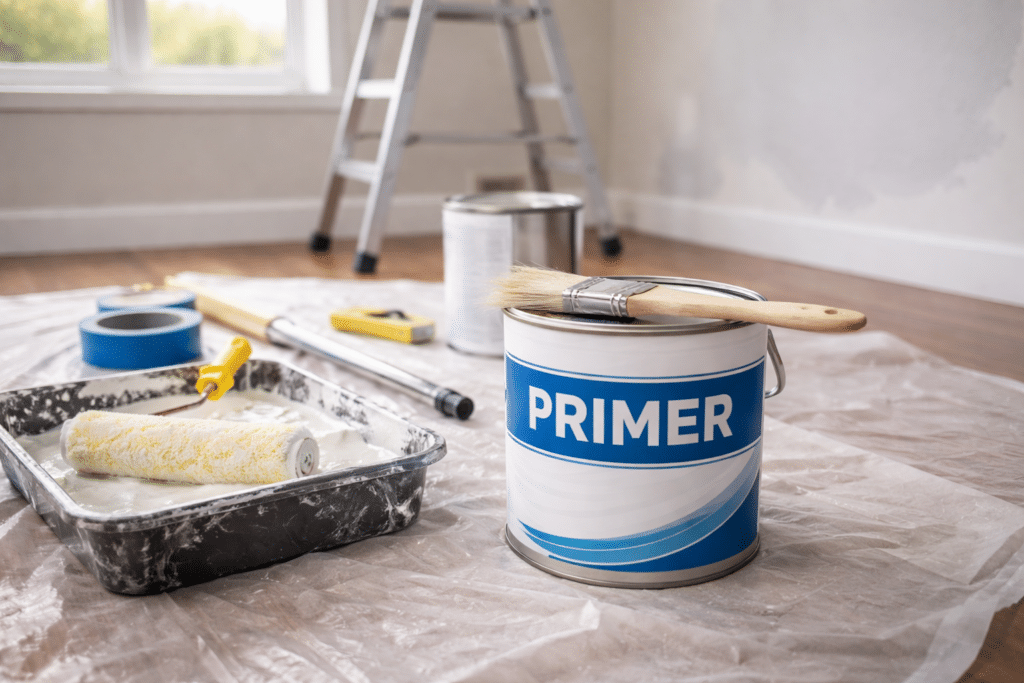
What Paint Primer Actually Does
Paint primer acts as the base layer in a paint system. It helps the surface accept the paint coat more evenly.
Without primer, paint may soak into porous materials like drywall or wood. This can lead to blotchy areas where the color looks uneven.
Primer helps solve several common issues at once:
- improves adhesion between paint and surface
- seals porous materials like drywall or wood
- blocks stains and discoloration
- creates a consistent surface for the top coat
Think of it as preparing the canvas before adding the color. When primer is applied correctly, the final coat usually looks smoother and more consistent.
Why Paint Primer Helps Paint Last Longer
Paint durability often depends on how well the coating sticks to the surface. If the bond is weak, paint can peel, crack, or wear down faster.
Primer strengthens that connection.
Many primers contain bonding agents designed to grip surfaces like wood, drywall, masonry, and metal. Once dry, they create a stable base layer for the paint. This becomes especially helpful on surfaces that already have previous coatings.
For example, if a wall was painted with a gloss finish and the next coat uses an eggshell finish, primer helps the new paint bond properly. That extra step helps protect the surface and extend the life of the house painting project.
Different Types Of Paint Primer
Not all paint primer works the same way. Different formulas are designed for different materials.
Understanding these differences helps explain why professional painters choose specific primers for certain surfaces.
Latex Primer
Latex primer is one of the most common options today. It works well for drywall, plaster, and softwood surfaces. It dries quickly and produces lower odor than many oil-based primers.
Latex primers are often used for interior walls and ceilings because they seal porous surfaces effectively.
Oil-Based Primer
Oil-based primer is often chosen for surfaces that may have stains or heavy discoloration. These primers can block stains from water damage, smoke, or wood tannins. They also bond well to wood trim and certain glossy surfaces. Although they take longer to dry, they can provide strong stain-blocking power.
Bonding Primer
Bonding primer is designed to stick to surfaces that traditional primers struggle with. This includes materials like tile, laminate, glass, and previously painted glossy surfaces. These primers contain stronger adhesion agents that allow the paint coat to grip properly.
Masonry Primer
Masonry primer works best on concrete, brick, and stucco surfaces. These materials can be porous and absorb paint unevenly. Masonry primer seals the surface so the paint coat spreads evenly and holds up better against moisture.
When Paint Primer Is Most Important
There are several situations where paint primer makes a noticeable difference.
For example, primer is often used when painting new drywall. Fresh drywall absorbs paint quickly, which can cause uneven color without a sealed base.
Primer is also helpful when covering dark colors with lighter ones. Without it, the previous color may show through even after several coats.
Other common situations include:
- surfaces with stains or water damage
- bare wood or new trim
- repainting glossy surfaces
- masonry surfaces like brick or concrete
Using primer in these cases helps the paint coat perform the way it should.
How Paint Primer Helps With Adhesion
Adhesion is a word painters use to describe how well paint sticks to a surface. Many surfaces naturally resist paint. Metal, glossy trim, and smooth wood can all cause problems if paint is applied directly.
Primer creates a surface that paint can grip more easily. This improves durability and reduces the chances of peeling or flaking later.
Preparation also plays a role here. Surfaces are often cleaned, sanded, and dust is removed before primer is applied. These steps help primer bond correctly, which helps the paint coat bond as well.
Paint Primer And Moisture Protection
Moisture is one of the most common reasons paint fails early. Exterior surfaces like siding, brick, and stucco are exposed to rain, humidity, and temperature changes throughout the year.
Certain primers help seal the surface and slow down moisture penetration. This is especially helpful for surfaces like wood siding or masonry foundations.
When primer blocks moisture effectively, the paint coat remains intact longer and mildew growth becomes less likely.
How Paint Primer Works In A Complete Paint System
A painting project usually works best when each layer has a specific role.
Primer prepares the surface and improves paint adhesion. The base coat provides the main color coverage. The final coat adds durability and protection.
Together, these layers create a stronger coating system.
Skipping primer sometimes leads to issues like uneven sheen, stains showing through, or paint wearing down faster. That is why many professional painters still treat primer as a standard step in their process.
Paint Primer And Modern Paint Technology
Paint technology has improved over the years. Some modern products combine paint and primer in a single formula. These coatings can work well in certain situations, especially when repainting a surface that is already in good condition.
However, separate paint primer still provides stronger results in many cases.
For example, surfaces with stains, new drywall, or major color changes usually benefit from a dedicated primer layer. Professional painters often evaluate the surface condition before deciding which approach works best.
Final Thoughts On Paint Primer
Paint primer plays a larger role in painting projects than many people realize. It prepares the surface, improves adhesion, and helps paint last longer.
Different primers are designed for different materials, including drywall, wood, masonry, and metal. Choosing the right one helps prevent stains, uneven coverage, and early paint failure.
When used as part of a complete paint system, primer creates a stable base for the final color coat.
At Ukie Painting, applying paint primer is part of a clear process designed to create long-lasting results. Many homeowners who work with painters in Matthews, NC want a finish that looks great now and still holds up years later.
Our painting process typically includes:
- Inspecting surfaces such as drywall, wood, siding, brick, or concrete
- Cleaning surfaces to remove dust, mildew, and debris
- Sanding rough areas with sandpaper and repairing small imperfections
- Applying the correct paint primer to improve adhesion and coverage
- Applying high-quality paint coats for durability and color consistency
These steps help create a smoother finish and protect the surface underneath.
If you are planning a painting project in Matthews or the surrounding areas, our team is here to help. Call Ukie Painting at 980-351-5182 for a FREE estimate and see how we approach preparation, primer, and long lasting paint systems.